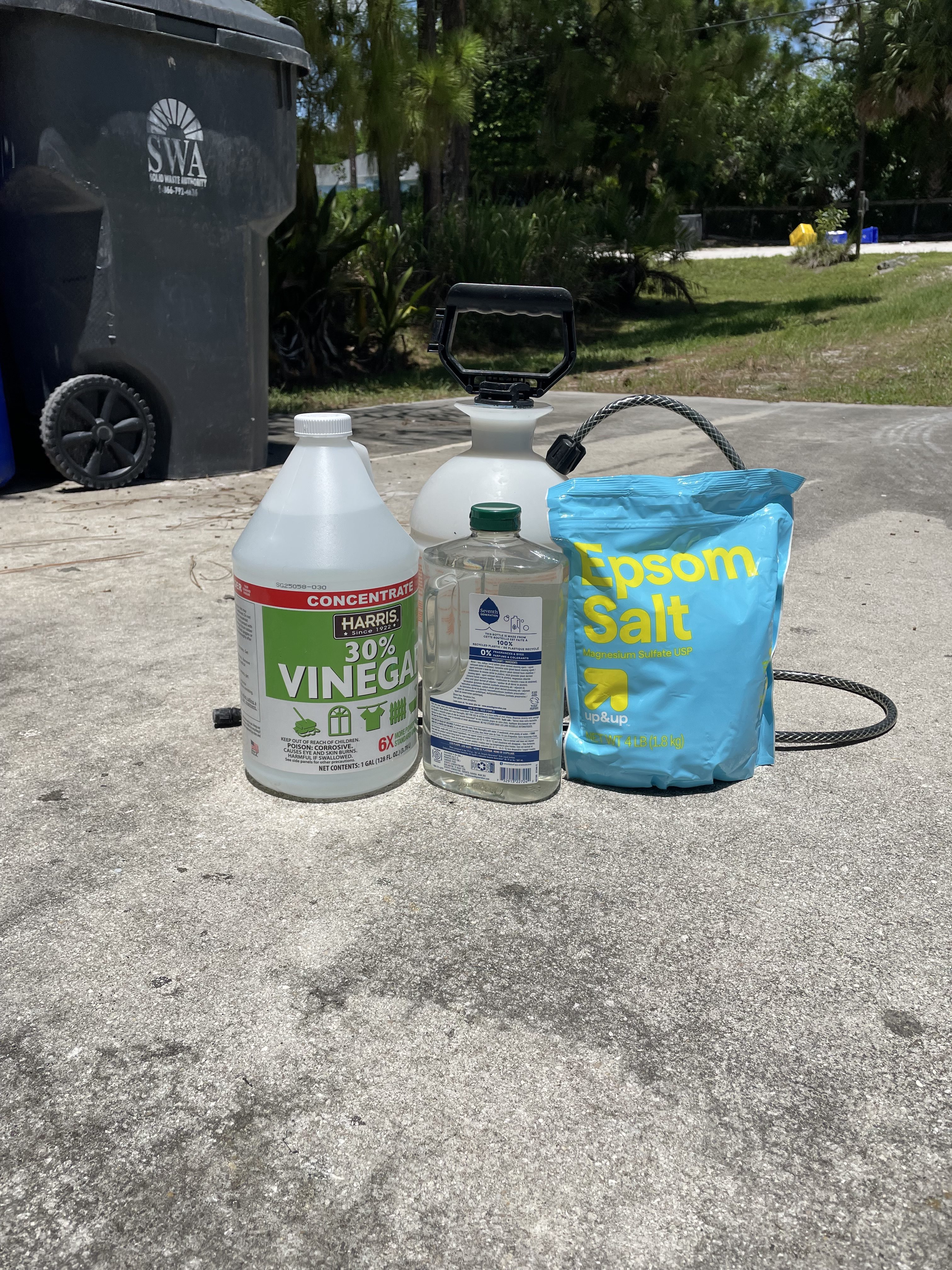
I had tried homemade weed killer before and was disappointed: 5% household vinegar barely touched the weeds, even after days. But this time — armed with 30% vinegar — I finally got results fast. I mixed up a fresh batch and sprayed it in the full heat of the day.
As my dad used to say… it was hotter than a popcorn fart.
I was sweating through my tank top just from spraying, but that intense heat made all the difference.
❌ Why 5% Household Vinegar Often Fails
Regular store vinegar (usually 5–7% acetic acid) may brown the leaves temporarily, but it rarely kills established or perennial weeds — especially if they have deeper root systems.
It acts only as a contact herbicide, meaning it only harms what it touches but doesn’t reach the roots. That’s why those weeds often bounce back within days.
Learn more: Garden Myths, The Spruce, ARS USDA
Why This Mix Works: Ingredients & Science
30% Vinegar: High-strength vinegar (20–30% acetic acid) rapidly dehydrates plant tissue, causing foliage to brown and collapse within hours — especially under hot sun.
Eco-friendly dish soap: A surfactant (like natural dish soap or castile) that helps the vinegar stick to leaves rather than slide off.Epsom salt (magnesium sulfate): This is often included in recipes, though it’s not essential for killing weeds. It’s a plant nutrient, not a herbicide, so it doesn’t harm your soil.
Learn more: Southern Living, University of Minnesota Extension
My Exact Recipe

Full Batch (1 Gallon) — For Driveways, Sidewalks, or Larger Yards:
This is what I used to tackle our entire rocky driveway.
- 1 gallon of 30% vinegar (undiluted)
- 1 cup of Epsom salt (optional)
- 1 tablespoon of eco-friendly dish soap
- Mix in a pump sprayer and shake well before spraying
Small Batch (2 Cups) — For Spot Treating Weeds:
Perfect if you just want to zap weeds along a fence line or patio crack.
Mix in a spray bottle, shake gently, and apply directly to weeds
- 2 cups of 30% vinegar
- 2–4 tablespoons of Epsom salt
- ½ teaspoon dish soap
- Mix in a spray bottle, shake gently, and apply directly to weeds
One Hour Later…
The leaves started curling. The edges browned. You could see the difference within 60 minutes.


I texted my husband some photos, and he called me that night:
“What did you use? Where did you get it?”
— Husband, highly suspicious of my backyard sorcery
He had been skeptical at first — but once he saw the results, he was sold. It was cheap, easy, and shockingly fast.
Tips for Best Results
- Wear boots and gloves. 30% vinegar didn’t irritate me, but it’s acidic. Safety first.
- Spray in full sun and dry weather. The sun speeds up leaf dehydration, making the vinegar work even faster.
- Avoid overspray near other plants. This mix is non-selective — it’ll kill anything green it touches.
- Reapply if needed. Some deep-rooted weeds may regrow after the first round.
Why sun matters: The vinegar dehydrates plants by breaking down the waxy coating on leaves. Sunlight intensifies this effect, almost “baking” the damage in place.
Planning to Use It in Raised Beds?
I had the same question — and here’s what I found:
Epsom salt is not like table salt. It’s magnesium sulfate — a nutrient, not a soil killer. It doesn’t build up or harm beneficial microbes like sodium chloride does.So yes, this mixture is safe to use before planting in raised beds.
- Just let the weeds die off
- Rake them out
- Water the soil once before planting to dilute any surface vinegar residue
You might even get a bonus magnesium boost to your next planting.
| Salt Type | Found In | Effect on Soil | Safe for Raised Beds? |
| Table Salt (NaCl) | Kitchen, ice melts | Kills microbes, damages structure | ❌ No |
| Epsom Salt (MgSO₄) | This recipe | Fertilizer, low risk | ✅ Yes |
