Some links on this site are affiliate links. That means if you purchase through them, I may earn a small commission—at no extra cost to you. I only recommend what I’ve personally used or researched and truly believe in.
There’s nothing like opening a jar of tomatoes in the middle of winter and smelling summer. That’s why I can tomatoes — no plastic-lined cans, no mystery ingredients, just jars of fresh tomatoes ready for soups, sauces, and everyday cooking.

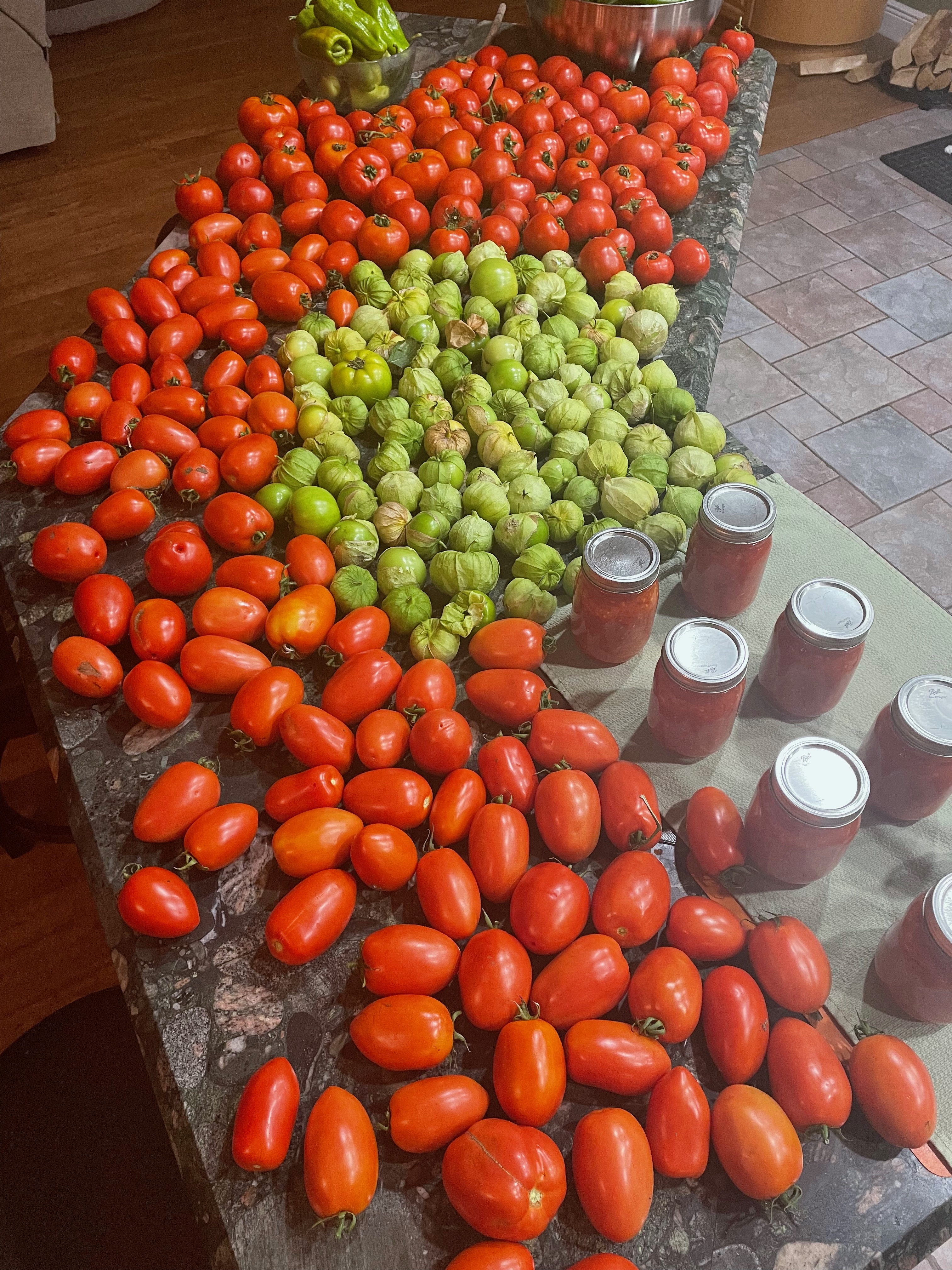
For this batch, I used Roma tomatoes. They’re meatier, with less water, which makes them perfect for canning because they cook down into a rich, hearty sauce. I used to frequent a local U-pick farm for baskets of tomatoes, but when that farm closed, I began trying to grow my own. Wherever your tomatoes come from, canning them at home is one of the most satisfying ways to stock a scratch kitchen.
This guide covers three versions: whole tomatoes, diced tomatoes, and sauce. Each requires slightly different preparation and processing, and I’ll walk you through exactly how I do it in my kitchen.
Picking, Sorting, and Prepping

Start by washing your tomatoes thoroughly in cool water. Sort out any that are bruised, split, or overripe. You only want firm, ripe tomatoes for canning. The rejects can still go to good use — toss them in the compost pile to help feed your garden for next year.
New to canning? Read this article on water bath canning
Whole Tomatoes
For whole tomatoes, begin by scoring the bottoms with a shallow “X.” Drop them into a pot of boiling water for a quick blanch, then transfer immediately to an ice bath. The skins will slip off easily. Once peeled, the tomatoes can go straight into your jars. To ensure safety, acidify each jar before filling. You can use 2 tablespoons bottled lemon juice per quart (1 tablespoon per pint) or ½ teaspoon citric acid per quart (¼ teaspoon per pint). I personally prefer fresh lemons in my own kitchen, but because bottled lemon juice offers consistent acidity, it’s what the USDA recommends. Use whichever option you feel most comfortable with.
Pack the peeled tomatoes into hot jars, then cover them with boiling water, leaving ¼ inch of headspace at the top. Run a spatula around the inside of each jar to release any air bubbles, then wipe the rims clean. Add lids and process in a boiling water bath for 40 minutes for quarts.
Diced Tomatoes
The process for diced tomatoes begins the same way: blanch, peel, and then dice the tomatoes into bite-sized pieces. Fill your hot jars with the diced tomatoes, again adding bottled lemon juice or citric acid as described above. Once packed, cover with boiling water, leaving ¼ inch headspace. After de-bubbling and wiping the rims, apply lids and process in a boiling water bath for 25 minutes for pints.
For me, having jars of diced tomatoes on the shelf feels a lot like stocking Rotel-style tomatoes — something I used to buy regularly. Now I can make my own, with nothing added except tomatoes and lemon juice.
Tomato Sauce
Making sauce is a little different. For this batch, I cut out the blossom and stem ends, quartered the tomatoes, and put them straight into a large pot without blanching. After simmering for about twenty minutes, the tomatoes softened enough to run through my food mill, which removed the skins and seeds. I returned the purée to the pot and cooked it over medium-high heat until it reduced by about half and thickened into a rich sauce.


When the sauce was hot, I ladled it into small jars — about the same size as the little cans you find at the store. Each pint-sized jar received 1 tablespoon bottled lemon juice or ¼ teaspoon citric acid to ensure safe acidity. The jars were filled to ¼ inch headspace, rims wiped, lids applied, and then processed for 35 minutes in a boiling water bath.
Checking Seals and Storing
After processing, I let the jars rest in the canner for about five minutes before lifting them out to cool on a towel. The hardest part is leaving them undisturbed for twelve to twenty-four hours. Once cooled, I check seals. With Ball jars, I press the center of the lid to ensure it doesn’t flex. With Weck jars, I look for the rubber tab pointing downward. My final test — the one that gives me the most confidence — is carefully lifting the jar by the glass lid alone. If it holds, the seal is good.
When I first started using Weck jars, I struggled with slipping seals and lids. I eventually figured out that if I place the rubber ring on the lid first, it stays put long enough to set the lid on the jar and attach the clips. That little trick has saved me a lot of frustration.


Eco Notes
Canning at home means fewer cans lined with plastic resins, fewer trips to the store, and food that tastes fresher. I like knowing that the scraps — skins, cores, blemished tomatoes — aren’t wasted but go back into the soil through composting. Over time, I’ve also been slowly adding more Weck jars to my collection. They’re more expensive than Ball, but I love that the glass lids and seals are reusable. It feels like a better investment in the long run.
My husband sums it up best:
“My wife makes her own stuff. It’s better for us and the kids — doesn’t have all that shit in it.”
Final Thoughts
When deciding what type of canned tomatoes to make, consider the way you use them most in your cooking. Sometimes whole tomatoes are all you need, and they’ll work in many recipes. I make diced tomatoes to mimic the canned Rotel-style I used to buy regularly, since they’re so handy for soups and casseroles. And sauce? That one’s essential in my kitchen — it’s something we always need on hand.
Also think about quantity. How many cans do you go through in a year? A can a week? That’s about fifty-two jars. Knowing your family’s habits will help you gauge how much to put up. If you’re new, start with just a few jars to get comfortable. The confidence builds quickly.
Canning tomatoes takes time, but it’s worth it. Every jar feels like summer in a bottle — one more step toward a scratch kitchen and a pantry you can truly trust.
Resources I Trust
- Ball Complete Book of Home Preserving
- Weck jars
- Canning kit essentials: jar lifter, funnel, water bath canner
Want to start your own scratch kitchen? Try one batch of tomatoes this season. Whether you make them whole, diced, or sauce, you’ll love the feeling of stacking those jars on your shelf.


